
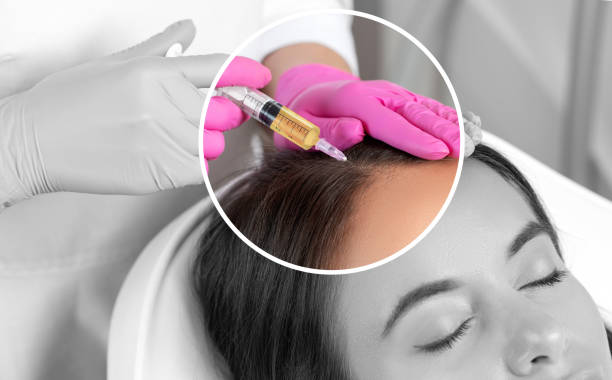
 therapy has become well-liked as a natural, minimally invasive method to promote hair growth and enhance scalp health.)
Millions of individuals worldwide are concerned about hair loss. It can have a major impact on one’s quality of life and sense of self, regardless of the cause—genetics, hormone imbalances, stress, or other causes. Of the several treatments that are currently accessible, Platelet-Rich Plasma (PRP) therapy has become well-liked as a natural, minimally invasive method to promote hair growth and enhance scalp health.
Everything you need to know about PRP treatment for hair loss is covered in this article, including how it works, the process, advantages, dangers, who is a good candidate, and what to anticipate both before and after treatment.
Knowing the Types and Causes of Hair Loss
It’s critical to comprehend the fundamentals of hair loss before beginning PRP treatment.
Typical Reasons for Hair Loss
Alopecia Androgenetica: The most prevalent reason is this genetic disorder, which is often referred to as male or female pattern baldness.
Temporary hair loss brought on by stress, disease, or medication is known as telogen efflux.
Patchy hair loss is a symptom of the autoimmune disease alopecia areata.
Inadequate intake of vital vitamins and minerals is a nutritional deficiency.
Conditions affecting the scalp include psoriasis, dandruff, or fungal infections.
Hormonal changes include thyroid issues, menopause, and pregnancy.
Different Patterns of Hair Loss
Male pattern baldness is characterised by a thinning crown and receding hairline.
Baldness in women is characterised by diffuse thinning across the top of the head.
Patchy Hair Loss: Alopecia areata causes round bald patches.
Knowing what kind of hair loss you have might help you decide if PRP therapy is right for you.
PRP therapy: what is it?
Using a concentration of your own blood platelets, platelet-rich plasma (PRP) therapy promotes healing and regeneration. Because they release growth factors, platelets are blood cells that are essential for clotting and tissue repair.
PRP therapy seeks to stimulate dormant hair follicles, boost the scalp’s blood flow, and encourage the creation of new hair in the context of hair loss.
How Does PRP Treatment for Hair Loss Operate?
PRP has a lot of platelets that are loaded with growth factors like
Growth Factor Derived from Platelets (PDGF)
VEGF, or vascular endothelial growth factor
TGF-β, or Transforming Growth Factor Beta
EGF, or epidermal growth factor
These growth factors aid in:
stimulating hair follicle stem cells.
increasing the follicles’ blood supply.
encouraging the scalp’s creation of collagen.
increasing the density and size of hair follicles.
Hair follicle revitalisation and increased hair thickness and growth are the overall results.
The PRP Process: Step-by-Step
1. Evaluation and Consultation
After reviewing your medical history and assessing the state of your scalp, a dermatologist or hair specialist decides whether you are a good candidate for PRP.
2. The Draw of Blood
As with a standard blood test, a tiny volume of blood—typically 10–20 ml—is extracted from your arm.
3. The centrifugation method
Red blood cells, white blood cells, and platelet-rich plasma are separated from the blood by placing it in a centrifuge that spins quickly.
4. PRP preparation
For injection, the platelet-rich plasma layer is collected.
5. Injection and Scalp Preparation
After cleaning your scalp, a topical anaesthetic could be used to ease any pain. The PRP is injected into the designated thinning hair patches of the scalp using tiny needles.
6. Care After Treatment
Usually, the session lasts between thirty and sixty minutes. Although you should adhere to your doctor’s aftercare recommendations, you can typically return to your regular activities right away.
PRP’s Natural and Autologous Hair Loss Benefits: By using your own blood, PRP reduces the possibility of allergies or rejection.
Promotes the activation of latent follicles, which in turn stimulates hair growth.
Enhances Hair Thickness: Gives current hair more body and thickness.
Minimally Invasive: No downtime or surgery is necessary.
Safe and Well-Tolerated: There is often little chance of adverse consequences.
Who Makes a Perfect Candidate?
PRP treatment works well for those who have:
Alopecia androgenetica in its early stages.
diffuse hair loss.
a healthy scalp with enough hair follicles left.
no serious infections or underlying scalp problems.
It might work less well for people who have:
full follicle loss and advanced baldness.
active skin conditions or infections of the scalp.
problems with the blood or platelets.
ladies who are nursing or pregnant.
Before beginning treatment, a comprehensive medical evaluation is required.
How Many Meetings Are Needed?
Patients usually go through:
Initially, there were three to four sessions separated by roughly four to six weeks.
Maintenance treatments are then administered every four to six months.
After two to three months, results typically begin to show, and they can last for up to a year.
Risks and Adverse Effects
Although PRP is thought to be safe, some potential adverse effects include:
slight discomfort or pain where the injection was made.
transient redness or swelling.
stiffness in the scalp or headaches.
uncommon risk of infection.
To reduce hazards, always make sure a certified specialist performs the treatment.
PRP Therapy in Comparison to Other Hair Loss Therapies
| Treatment | Description | Pros | Cons |
|---|---|---|---|
| PRP Therapy | Platelet injections to stimulate growth | Natural, minimally invasive, low risk | Multiple sessions needed, cost |
| Minoxidil (Topical) | OTC medication to slow hair loss | Easy to use, FDA approved | Requires ongoing use, scalp irritation |
| Finasteride (Oral) | Prescription drug for men only | Effective for male pattern baldness | Potential side effects (sexual dysfunction) |
| Hair Transplant Surgery | Surgical follicle transplantation | Permanent results | Invasive, expensive, downtime |
| Laser Therapy | Low-level lasers stimulate follicles | Non-invasive, home-use devices | Variable results, time-consuming |
For better outcomes, PRP can be used in conjunction with these therapies.
Getting Ready for PRP Therapy
Aspirin and ibuprofen are blood thinners that should not be taken 48 hours before to therapy.
Drink plenty of water and abstain from alcohol for 24 hours beforehand.
Tell your doctor about any health conditions or medications you are taking.
To maximise healing, keep up a nutritious diet.
Tips for Aftercare After PRP
Do not wash your hair for 24 to 48 hours.
Avoid strenuous exercise and exposure to the sun for a few days.
Steer clear of harsh chemicals and use gentle shampoos.
Regarding extra hair care products, heed the advise of your physician.
Reasonable Goals and Outcomes
PRP is not a miraculous treatment, despite the fact that many patients report excellent results. Among the elements affecting success are:
age and general well-being.
cause and extent of hair loss.
treatment consistency.
quality of the PRP method and preparation.
It takes time for hair growth cycles to react, therefore patience is essential.
Questions and Answers (FAQs)
Is PRP therapy uncomfortable?
A: Topical anaesthetics assist reduce pain; most people have moderate discomfort.
Can women have PRP treatment?
A: Both men and women can benefit from PRP.
Are the outcomes permanent?
A: Although PRP promotes natural development, maintenance treatments are necessary.
What is the price of PRP therapy?
A: Prices vary greatly depending on the clinic and location, but they usually fall between $500 and $2,000 per session.
In conclusion
For those looking for a minimally intrusive, natural solution to hair loss, PRP treatment is a potential choice. It provides a safe method to increase hair density and revitalise hair follicles by utilising your body’s natural growth elements. Individual outcomes vary, though, as with any medical procedure, so speaking with a trained specialist is essential.
Make sure you have reasonable expectations and balance the advantages of PRP therapy for hair loss against the expenses and time commitment. PRP can contribute significantly to your hair restoration process if you use it properly.
Disclaimer
This article is not meant to replace expert medical advice; rather, it is meant to be informative only. Before beginning any treatment for hair loss, including PRP therapy, always get advice from a dermatologist or licenced healthcare professional. The reason of hair loss, personal health, and treatment compliance can all affect individual outcomes. Any results resulting from the usage of the information in this article are not the author’s responsibility.