
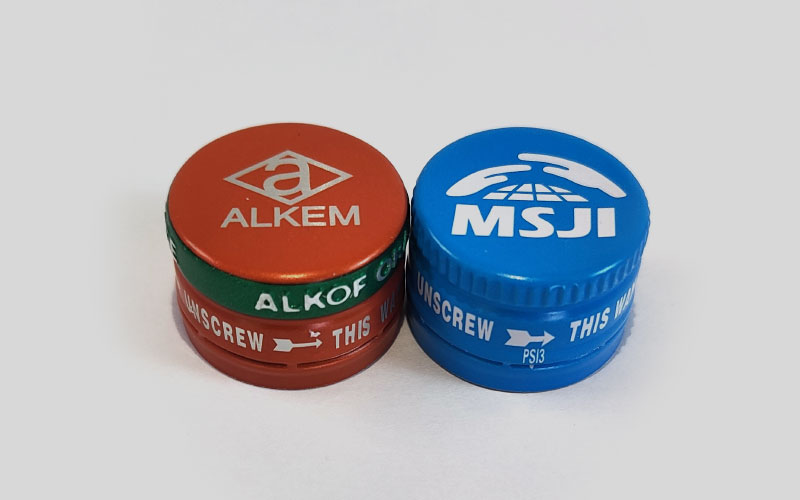

The first line of defence against a tampered or counterfeit medicine is a closure that shows when it has been opened. A tamper-evident seal does not prevent someone from getting into a vial or bottle. It makes any interference visible, so a pharmacist, nurse, or patient can see at a glance that the package is no longer in its original state and reject it. For injectable and many oral medicines, that visible signal is the difference between a caught problem and a harmed patient.
This principle is written into regulation rather than left to good practice. Tamper-evident packaging requirements emerged after deliberate product tampering incidents and are now embedded in pharmaceutical and medical-device packaging rules worldwide.
What “tamper-evident” actually requires
A tamper-evident feature is one that, once breached, cannot be restored to its original appearance without obvious damage. The World Health Organization, in its guidance on packaging for pharmaceutical products, treats tamper evidence as a core function of the closure rather than an optional extra. The point is irreversibility: a closure that can be opened and neatly closed again offers no protection, because the evidence disappears.
For solid and liquid oral products, the US Code of Federal Regulations 21 CFR 211.132 sets out tamper-evident packaging requirements and lists acceptable technologies, from breakable caps to sealed tubes. The underlying logic applies equally to the metal closures used on injectable vials.
How a pilfer-proof cap delivers the signal
On bottles and many vial formats, the workhorse is the aluminium pilfer-proof cap, sometimes called a ROPP cap for the roll-on, pilfer-proof method used to form it. The cap is supplied as a plain aluminium shell. During capping, rollers form the threads against the container’s neck and, critically, form a lower band that is bridged to the cap body by thin tabs. When the user unscrews the cap for the first time, those bridges break and the band stays behind on the neck. The broken bridge is the evidence. It cannot be reset.
The engineering matters because the signal has to be reliable in both directions. The cap has to break cleanly and visibly on genuine opening, but it must not loosen or pre-break during shipping, temperature swings, or handling. That balance comes down to aluminium temper, bridge dimensions, and the precision of the forming process. A cap that fails to break gives false reassurance; one that pre-breaks triggers needless rejection of good product.
Manufacturers who serve the regulated market design aluminium pilfer-proof caps around exactly this tolerance, across the range of neck sizes that pharmaceutical containers use. The cap is simple to look at and unforgiving to get wrong.
Tamper evidence is part of a larger security picture
A broken band on its own does not authenticate a medicine; it shows that the original closure is intact. Modern drug security layers tamper evidence together with serialisation, track-and-trace coding, and overt or covert authentication features. The closure is the layer the patient can actually see and check without any equipment, which is why it remains foundational even as electronic verification spreads.
For the people at the point of care, the practical guidance is unchanged and worth repeating: inspect the closure before use, reject any vial or bottle where the tamper band is already broken or missing, and never use a product whose seal looks resealed or damaged. The system only works if the broken signal is treated as a stop.
The takeaway
Tamper-evident closures protect patients by making interference impossible to hide. A pilfer-proof cap does this through a deliberately fragile band that breaks once and stays broken, giving anyone in the supply chain a no-tools check on whether a medicine is in its original state. The technology is decades old, codified in regulation from WHO guidance to 21 CFR 211, and still the most direct defence the end user has. Behind it sits unglamorous precision engineering, getting an aluminium band to break exactly when it should and never when it should not.
The Autofits Technical Team writes on pharmaceutical primary packaging. Autofits is a Nashik-based manufacturer of vial seals and pilfer-proof caps; more on the company is available on its about page.